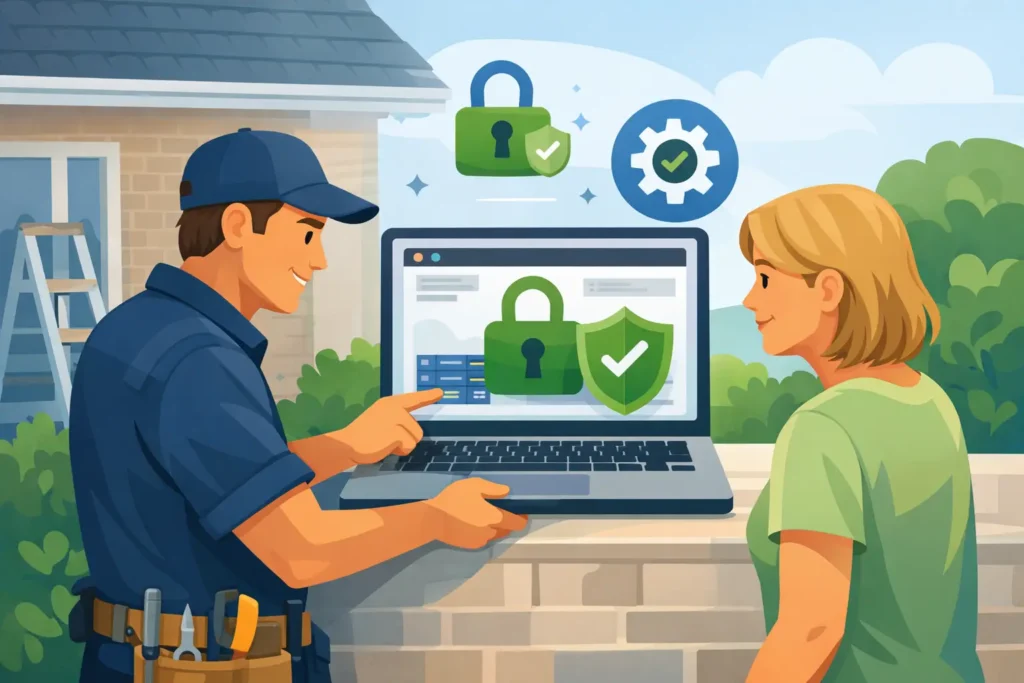
If your website throws up a security warning, most people won’t hang around to figure out why. They’ll hit back, call the next business, and you’ve just lost an enquiry. That’s why an ssl certificate installation service matters more than most tradies realise. It’s not just a technical box to tick. It helps your website look trustworthy, protects information sent through your site, and stops avoidable problems that can cost you leads.
For a local service business, trust matters fast. Someone lands on your site, checks a few things, and decides whether to call. If the browser says the site isn’t secure, or the padlock is missing, that little doubt can be enough to put them off. You might still be the best sparkie, plumber, builder or landscaper for the job, but your website has already made things harder than they need to be.
What an SSL certificate installation service actually does
An SSL certificate is what allows your website to load securely over HTTPS instead of HTTP. In plain English, it tells browsers that your site is legitimate and that data sent through it is encrypted.
The certificate itself is only part of the job. The real work is in getting it installed properly, connected to the right domain, checked for errors, and set up so your website runs securely without breaking forms, images, or page loading. That’s where an ssl certificate installation service comes in.
A proper service usually covers generating the certificate request, installing the certificate on your hosting or server, setting up the full certificate chain, redirecting traffic from HTTP to HTTPS, and testing the site afterwards. If that sounds like something you’d rather not touch between jobs, that’s fair enough. Most business owners don’t need to know every moving part. They just need it done right.
Why proper SSL setup matters for tradie websites
A lot of tradie websites have contact forms, quote request forms, click-to-call buttons, booking tools or email integrations. If your SSL isn’t installed correctly, those features can stop working properly or trigger warnings that put people off.
There’s also the trust factor. When someone is choosing between a few local businesses, they’re looking for signs that you’re reliable. A secure website helps. It won’t win the job on its own, but it supports the bigger picture. Good design, clear service info, local proof, and a secure site all work together.
Google also expects websites to use HTTPS. That doesn’t mean installing a certificate will suddenly shoot you to the top of search results, but it does remove one obvious issue. If your website has security warnings or mixed content errors, it can hurt user experience and make your site look outdated.
For local businesses trying to get more enquiries, this is really about removing friction. Every small problem on a website can chip away at trust. SSL is one of the easier ones to fix, and one of the more visible if left undone.
Signs you may need an SSL certificate installation service
Sometimes the problem is obvious. Your site says “Not Secure” in the browser bar, or visitors mention a warning when they try to open it. Other times, the certificate exists, but the setup is messy.
You may need help if your website loads on HTTPS but shows broken images, if some pages still load on HTTP, if forms stop sending properly, or if redirects send people to the wrong version of the site. Another common issue is certificate expiry. A website can be fine one day and flagged the next because the certificate wasn’t renewed or updated properly.
This happens more often than you’d think with older websites, DIY setups, or sites that have been moved between hosting providers. It also happens when nobody really knows who set it up in the first place.
SSL installation is simple until it isn’t
People often assume SSL is just a quick switch. Sometimes it is. Sometimes it isn’t.
If your website is on straightforward hosting with a standard setup, installation can be fairly quick. But if the site has old plugins, hard-coded links, multiple domain versions, email settings tied to the domain, or previous migration issues, SSL can expose other problems hiding in the background.
That doesn’t mean it’s a disaster. It just means there’s a difference between installing a certificate and making sure the whole site works properly afterwards. That second part is where shortcuts usually cause trouble.
A rushed setup can leave you with mixed content warnings, redirect loops, browser trust issues, or a site that works on one device and not another. For a business relying on calls and quote requests, that’s not a small issue.
What to expect from a good ssl certificate installation service
A useful service should be practical, not padded out with jargon. You want someone to sort the certificate, test the website, and make sure the secure version is the one customers actually see.
That normally includes checking your domain and hosting access, installing the correct certificate, forcing HTTPS sitewide, updating internal links where needed, and testing forms and key pages. If your website uses third-party tools, they should be checked too. There’s no point getting the green light on the homepage if your quote form still throws a warning.
You also want clarity around renewals. Some certificates renew automatically. Some don’t. If nobody keeps an eye on it, the same problem can pop up again later.
A good provider should be able to explain the issue in plain English, fix it properly, and tell you what they’ve done. No fluff, no mystery.
DIY vs getting it handled properly
If you’re comfortable inside hosting panels and website settings, you might be able to install a certificate yourself. Plenty of platforms offer free SSL options, and for simple websites that can be enough.
But there’s a trade-off. Saving an hour up front can cost you more time later if something breaks and you’re stuck trying to work out why your site won’t load properly. For time-poor business owners, that’s usually the bigger cost.
Most tradies don’t want to spend their afternoon messing around with redirects, cache issues, and browser errors. They want the website sorted so it answers the phone for them, brings in leads, and doesn’t create extra headaches.
That’s why getting the installation handled properly often makes more sense. It reduces risk, fixes problems faster, and gives you one less thing to chase.
When SSL problems affect more than security
An SSL issue can look like a security problem, but the real damage often shows up in lost enquiries. If someone can’t submit a form, if the browser throws up a warning, or if your site looks half-broken on mobile, people won’t wait around.
That matters even more for local search traffic. These visitors are usually ready to act. They need a service, they’ve found your site, and they’re deciding whether to call now. If trust drops at that moment, you lose warm leads you’ve already paid for with your website, SEO, or ad spend.
For businesses around Perth and the Perth Hills, that can mean missed work from suburbs you actually want more jobs in. You don’t need more website issues. You need fewer barriers between a search and an enquiry.
SSL is one part of a website that pulls its weight
A secure site doesn’t replace good content, clear service pages, or a strong Google Business Profile. But it supports all of it. Think of it as basic website maintenance that protects the rest of your online setup.
If your website is meant to bring in calls and quote requests, every part of it needs to do its job. Security, speed, mobile usability, clear calls to action, and local relevance all matter. SSL is one of those things people only notice when it goes wrong, but when it does, it can quietly cost you work.
That’s why it’s worth treating it as a business issue, not just a technical one. If your certificate is missing, expired, or installed badly, it’s not only about encryption. It’s about trust, lead flow, and whether your website helps or hurts when customers are ready to get in touch.
If you’re not sure whether your website is set up properly, get it checked before it becomes a bigger problem. A secure website should be the standard, not something you fix after the warnings start showing up.