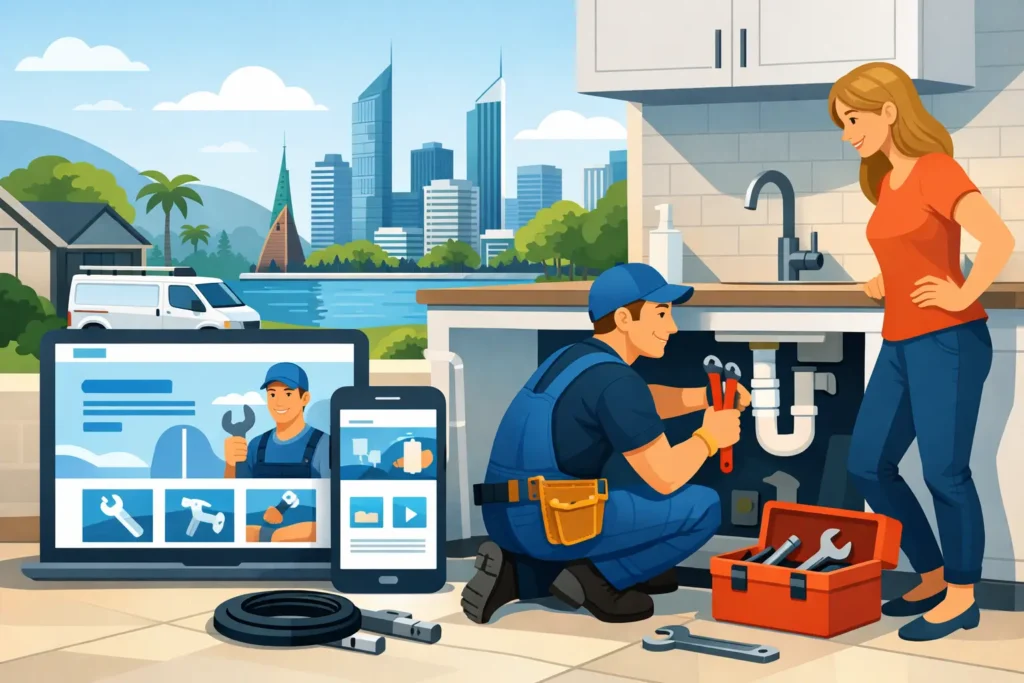
A leaking hot water system at 6:30 am does not wait for a flashy website. When someone in Perth needs a plumber, they grab their mobile, search fast, and call the business that looks trustworthy and easy to contact. That is why plumber website design Perth businesses use should be built around one thing first – getting enquiries.
A good plumbing website is not there to win design awards. It is there to answer questions quickly, show that you service the right areas, and make it dead simple for people to call, request a quote, or book a job. If your website looks decent but does not bring in work, it is not doing its job.
What plumber website design in Perth actually needs to do
Most plumbing businesses do not need a massive website with pages of filler. They need a site that works hard when people are ready to hire. That means the homepage should clearly say what you do, where you work, and how to get in touch. If someone lands on your site and still has to guess whether you handle blocked drains, hot water systems, petrol fitting, or emergency callouts, you are losing work.
The other part is trust. People are inviting you to their home or business, often when something has already gone wrong. They want to know you are local, reliable, licensed, and likely to answer the phone. A strong plumbing website helps with that by using real service pages, genuine reviews, clear contact details, and plain English throughout.
This is where plenty of tradie websites miss the mark. They focus too much on looking modern and not enough on making the next step obvious. Nice visuals help, but they are not what gets the call.
The biggest problems with old plumbing websites
A lot of plumbers already have a website, but it was built years ago and has not kept up. It might load slowly, look rough on mobile, or bury the phone number where no one can find it. In some cases, it barely says what suburbs are serviced, which makes it harder to show up for local searches.
Another common issue is vague copy. If every page says the same generic stuff about quality service and customer satisfaction, it does not give Google or your potential customers much to work with. People want specifics. They want to know whether you do burst pipes in Midland, hot water replacements in Mundaring, or bathroom plumbing renovations across the Perth Hills.
There is also the lead problem. Some websites get traffic but not calls. Usually that comes down to poor layout, weak messaging, or too many steps. If a customer has to hunt around for your number, fill out a long form, or scroll through walls of text before finding what they need, many will back out and try the next plumber.
What makes a plumbing website convert better
A high-converting plumbing website is usually simple. It has a strong headline, a visible phone number, clear service sections, and calls to action placed where people actually need them. It also works properly on mobile, because that is where a big chunk of plumbing searches happen.
Good plumber website design Perth businesses can rely on should also reflect how real customers search. They are not typing broad terms and spending half an hour researching. They search for things like emergency plumber, blocked drain repair, leaking tap fix, or hot water plumber near me. Your website should match that intent with dedicated pages and useful content that tells people they are in the right place.
Photos matter too, but only if they help build confidence. Real images of your team, ute, completed work, or branded gear are more useful than stock photos of a bloke holding a spanner with a spotless white shirt. Local customers can spot fake-looking websites quickly.
Why local SEO matters in plumber website design Perth
A plumbing website on its own is only part of the job. If it is not set up to help you appear in local search results, map listings, and suburb-based searches, you are leaving enquiries behind.
That does not mean stuffing Perth into every second sentence. It means building pages and content around the areas you genuinely service and the work you actually want more of. If you cover Midland, Gidgegannup, Sawyers Valley, or nearby suburbs, your website should make that clear in a natural way. This helps both search visibility and customer confidence.
Your website should also support your Google Business Profile rather than sitting separate from it. When those two line up properly, you have a better chance of showing up when someone nearby searches for a plumber and wants help now. Reviews, service pages, contact details, and location signals all play a part.
It depends a bit on your business model. If you mainly chase emergency jobs, your website should be geared around fast contact and urgent plumbing services. If you focus more on renovations, maintenance, or commercial work, the structure and wording should support that instead. The best websites are not generic. They are built around the kind of work you want booked in.
The pages every plumbing website should have
Not every plumbing site needs dozens of pages, but there are a few that do the heavy lifting. A strong homepage sets the tone. Service pages explain exactly what you offer. A contact page makes calling or sending an enquiry easy. And if you work across several local areas, suburb or service area pages can help bring in the right traffic.
Beyond that, reviews and trust signals should be built into the site, not left as an afterthought. If customers say you turn up on time, explain the job properly, and fix problems fast, those points should be visible. They often matter more than polished design features.
A lot of tradies ask whether they need a blog. Sometimes yes, sometimes no. If it helps answer common customer questions and supports local search visibility, it can be useful. If it is just going to sit there with generic posts no one reads, it is probably not the best use of time.
Mobile-first matters more than desktop
Most plumbers are not getting found by someone sitting at a desk comparing ten websites. They are getting found by people on a mobile who want help quickly. That changes how your website should be built.
Buttons need to be easy to tap. The phone number should be visible without scrolling too far. Forms should be short. Pages should load fast. If your site is clunky on mobile, you will lose leads before they ever contact you.
This is one of the biggest differences between a website that looks fine and a website that performs. Plumbing customers are often in a rush. Your site needs to keep up with that behaviour rather than slowing it down.
Why plain English wins more jobs
A lot of business websites try too hard to sound impressive. For plumbers, that usually backfires. Customers do not want jargon. They want to know if you can solve the problem, whether you service their area, and how soon they can speak to someone.
Plain English builds trust faster. It makes your website easier to scan and easier to act on. It also suits how tradie businesses actually operate. You are not trying to impress a boardroom. You are trying to get the next call from someone who needs a reliable local plumber.
That same thinking applies behind the scenes too. A good web partner should explain what is being done and why, without burying you in technical rubbish. If something on your site is not helping generate leads, it should be fixed. Simple as that.
A website should support the way your business runs
The best plumbing websites are built with real day-to-day business in mind. If you are on the tools most of the day, your site should help filter the right enquiries and make contact easy. If you miss calls because you are under a sink or on a job, your enquiry forms and call prompts need to do more of the work.
That is also why ongoing updates matter. Services change. Service areas expand. Reviews come in. Search behaviour shifts. A website should not be something you launch and ignore for five years. It should keep supporting the kind of work you want more of.
For plumbers around Perth and the Perth Hills, that usually means a practical setup that combines strong web design, local search visibility, and clear conversion points. That is the sort of work Yazoogle focuses on – helping tradies get websites that do more than just sit there looking pretty.
If your current plumbing website is outdated, hard to use, or not bringing in enough calls, the problem is probably not that you need more fluff. You likely need a site that is clearer, faster, and built around how local customers actually choose a plumber. Get that right, and your website starts pulling its weight while you get on with the job.