A blocked drain at 7am is not a research project. The customer opens Google, sees a few local plumbers, and calls the business that looks available, credible and easy to deal with. This plumber profile turnaround example shows how a poor-performing Google Business Profile can become a better source of calls and quote requests without relying on flashy marketing.
The point is not to make a plumbing business look like a big company. It is to make it obvious that you service the area, do the job the customer needs, answer the phone and have a solid track record. For busy Perth plumbers, those basics are where most online leads are won or lost.
The starting point: a profile that was not doing its job
Consider a typical small plumbing business servicing local homes and small commercial jobs. The owner had a Google Business Profile, a basic website and years of experience. But when someone searched for terms such as “hot water system repair”, “blocked drain plumber” or “emergency plumber near me”, the business was rarely visible in the important local results.
The profile was technically there, but it gave customers very little reason to call. It had an old phone number listed in one place, vague business information, a handful of ageing photos and no clear description of the work the plumber actually wanted more of. Reviews existed, but they were scattered over several years and none had a response.
The website created another problem. It looked acceptable on a desktop computer, but on a mobile it took too long to get to the phone number. A customer dealing with a leaking pipe is not going to hunt through pages to find out whether you service their suburb.
This is a common situation. A profile can exist and still fail to bring in work because it is incomplete, out of date or does not match what people are searching for.
What was changed in this plumber profile turnaround example
The first job was not chasing rankings. It was fixing the information that customers and Google needed to trust.
The business name, primary phone number, opening hours, service area and website details were checked against every other online mention. Consistency matters because mixed information creates doubt. It can also mean calls are going to an old number or customers are being told the business is closed when it is not.
Next, the service categories and profile description were tightened up. Rather than a broad statement saying the business handled “all plumbing work”, the profile made its core jobs clear: blocked drains, burst pipes, hot water systems, leaking taps and toilets, gas plumbing where licensed, and general residential plumbing. The wording stayed natural and useful. It was written for a homeowner trying to decide who to call, not for a marketing textbook.
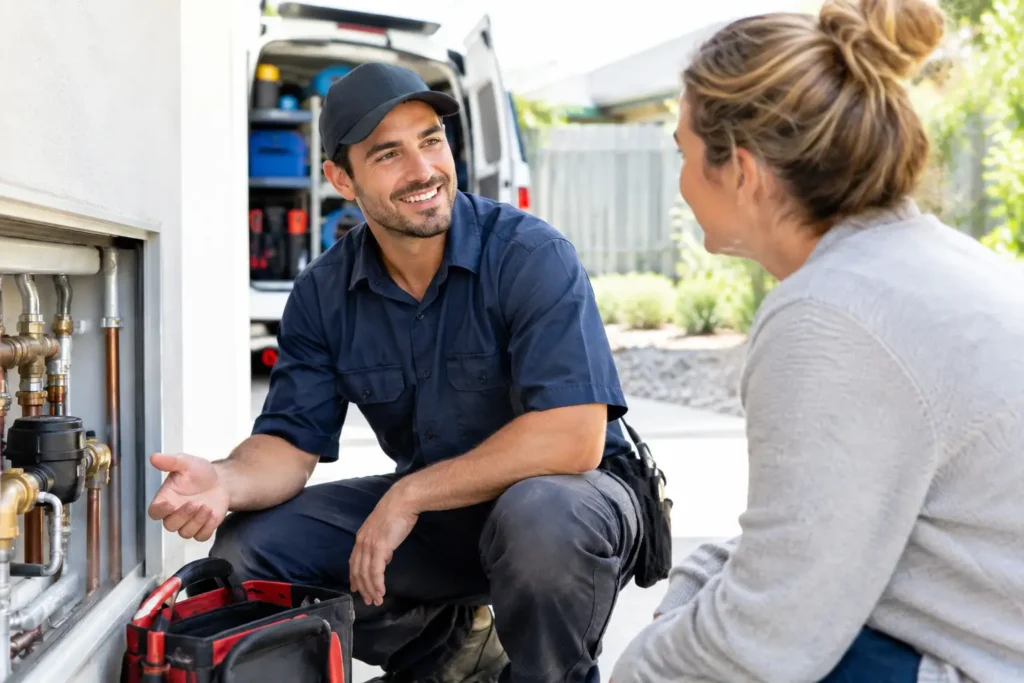
Fresh photos were then added. Not stock images of shiny bathrooms – real images of the branded ute, the plumber on site, completed work and equipment used for drainage or hot water jobs. Real photos help a local service business feel legitimate. They also give customers a quick sense that there is a real person behind the listing.
The website was adjusted to support the profile instead of getting in its way. Each main service had a clear page, the contact number was prominent on mobile, and enquiry forms were short enough that people would actually use them. The call to action was simple: call now, request a quote, or ask about same-day help where available.
Reviews became part of the regular job process
Reviews were the biggest missed opportunity. The plumber had happy customers, but no reliable way to ask for feedback once a job was finished.
A simple review process was put in place. After the work was completed and the customer was happy, they received a short message with a direct request to leave an honest review. No pressure, no scripted five-star demand and no awkward follow-up weeks later. Just a timely ask while the good experience was fresh.
New reviews started mentioning the things future customers care about: turning up when promised, explaining the problem clearly, leaving the site tidy and getting the job sorted. Those details carry far more weight than a star rating on its own.
Responses mattered too. A short, genuine reply shows that the business is active and takes customers seriously. It does not need to be fancy. Thanking the customer, referring to the type of work completed where appropriate, and keeping the tone professional is enough.
Why the changes improved enquiry quality
More visibility is useful, but the better result is getting calls from people who need the work you want to do. A vague profile can attract unsuitable enquiries, price shoppers or calls from outside your service area. A well-set-up profile helps qualify the customer before they pick up the phone.
For example, a plumber who wants more hot water replacement work should make that service easy to find, supported by clear information on the website. A business focused on emergency call-outs needs accurate hours and a reliable process for answering or returning calls. If you do not offer 24/7 service, do not imply that you do. Clear expectations reduce wasted calls and unhappy customers.
The profile also worked better because it matched local intent. Customers were not looking for a plumbing company with vague claims. They wanted someone servicing their area who could handle a specific issue. Clear services, genuine reviews and local proof gave them enough confidence to make contact.
The results to look for, beyond just rankings
A proper turnaround should be measured by what happens to the business, not only where it appears on Google. The useful signs are an increase in phone calls, more requests for quotes, stronger direction requests, more website visits from the profile and a steady flow of recent reviews.
It is also worth tracking what people are calling about. If blocked-drain enquiries rise but you are trying to grow bathroom renovation plumbing, that tells you something. You may need to adjust service information, add stronger pages for the work you want, or decide whether those drain jobs are still valuable for keeping the diary full.
Results will vary. A plumber in a competitive Perth suburb may need more time and more consistent review activity than one servicing a smaller local area. Seasonality, your response time, the quality of the website and how many established businesses are nearby all affect the outcome. There is no honest promise that a profile change will fill next week’s schedule on its own.
But a neglected profile is almost always leaving enquiries on the table.
What plumbers can take from this example
The useful lesson from this plumber profile turnaround example is that customers do not need a long sales pitch. They need quick proof that you are local, capable and easy to contact.
Start by checking your profile as if you were a customer with water coming through the ceiling. Is the number correct? Can you tell within seconds what jobs you do? Are the photos current? Do recent reviews show that customers trust you? Does the website make it easy to call from a mobile?
If the answer is no to any of those, fix that before spending money on broader advertising. A clear Google Business Profile and a website built to turn visits into calls give every other marketing effort a better chance of working.
For plumbers across Perth and the Perth Hills, the best online presence is not the one with the most jargon or the fanciest graphics. It is the one that helps a stressed customer choose you, call you and get a job booked without mucking around.