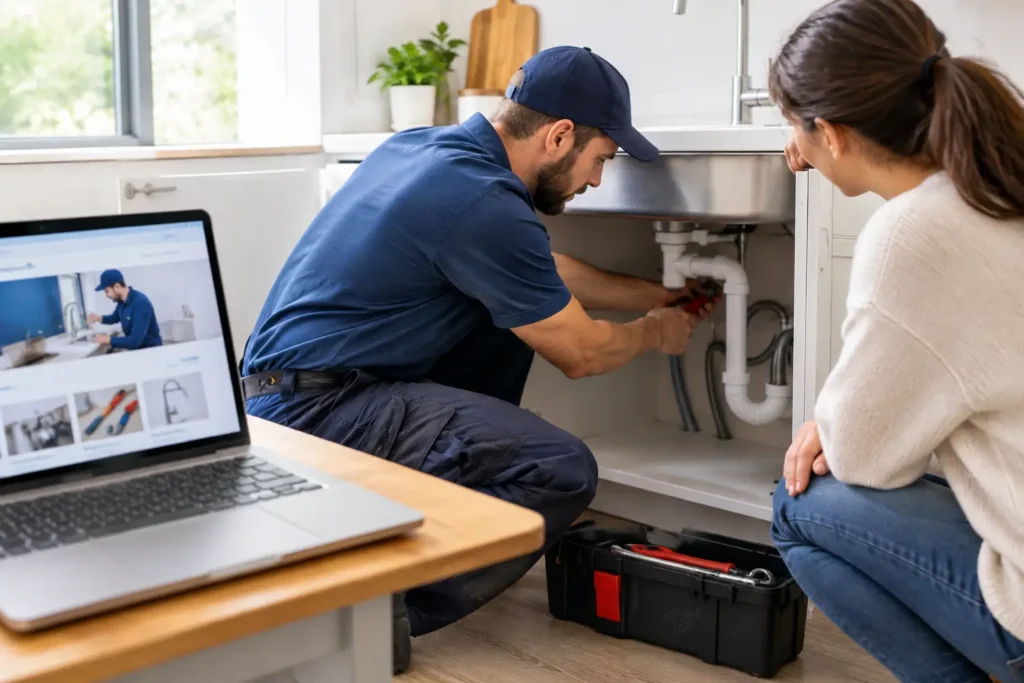
A plumbing website has one job: make it easy for a local customer with a problem to call you. The best plumbing website design ideas are not about flashy effects or clever wording. They are about showing people you can fix the issue, serve their area and answer the phone when they need help.
When a burst pipe is flooding a laundry or a hot water system has stopped working, customers are not spending 20 minutes comparing websites. They are searching on their mobile, checking whether you look legitimate, and deciding who to call. Your site needs to make that decision simple.
1. Put your phone number where customers can see it
Your phone number should be at the top of every page, not buried in a contact page menu. On mobile, it should be a clear tap-to-call button that stays visible as someone scrolls.
For plumbers offering urgent repairs, wording such as “Need a plumber now? Call [number]” gives people a clear next step. If you answer after hours, say so. If you do not, be upfront about your operating hours and provide a quote request option for non-urgent work.
A contact form still has a place, especially for renovations, gas fitting, blocked drain inspections and planned maintenance. But for urgent work, calling needs to be the easiest option on the page.
2. Make the first screen explain what you do
The top section of your homepage should answer three questions fast: what plumbing work do you do, where do you work, and how does the customer contact you?
A vague headline such as “Quality Service You Can Trust” does not tell a customer much. A stronger version is: “Local Perth Plumber for Blocked Drains, Hot Water and Emergency Repairs.” It is specific, useful and matches the way people search.
Use a real photo of you, your team, or a clean work vehicle where possible. Stock photos can make a business look generic. A genuine photo with branded workwear, a ute or a completed job gives people a better reason to trust that you are a real local operator.
3. Build separate pages for the jobs you want more of
One general services page is rarely enough. If you want more blocked drain jobs, hot water replacements, leak detection work or bathroom plumbing enquiries, give each service its own page.
Each page should explain the problem in plain English, the type of work you handle, and what a customer should do next. For example, a blocked drains page might cover slow-draining sinks, overflowing toilets, tree roots and recurring blockages. It should then lead directly to a call or booking enquiry.
This also helps Google understand what your business is relevant for. More importantly, it helps customers land on a page that speaks directly to the issue in front of them.
4. Show the areas you actually service
People want to know whether you will come to them before they pick up the phone. Mention your core service areas naturally across your website, especially on the homepage and contact page.
For a plumbing business around Perth, that could include Perth Hills areas such as Mundaring, Midland, Gidgegannup or Sawyers Valley if those are regular service locations. Do not claim every suburb in WA just to look bigger. It can make the site feel less believable and lead to calls from areas you do not want to cover.
A dedicated service areas page can help, but it should contain useful information rather than a long, repetitive suburb list. Explain your usual coverage, whether travel charges may apply outside it, and how customers can check availability.
5. Use trust signals before asking for the job
Plumbing is one of those services where customers are often letting someone into their home under pressure. They need signs that you are qualified, reliable and easy to deal with.
Put your licence details, years of experience, insurance information and relevant qualifications where they are easy to find. If you are a family-run operation, offer upfront communication, or provide workmanship guarantees, state it clearly. Only promise what you can consistently deliver.
Google reviews are particularly powerful. A short review that mentions punctuality, tidy work, fair communication or a difficult repair handled well can do more than a paragraph of sales copy. Feature real reviews throughout the site, not only on one testimonials page.
6. Make your emergency plumbing page feel urgent
Emergency work needs a different page structure from planned plumbing jobs. The customer may be stressed, standing in water, or dealing with no hot water before work or school.
Lead with the emergency number and the situations you can help with. Mention common issues such as burst pipes, overflowing drains, gas leaks, sewer problems and failed hot water systems. Give safe, sensible steps they can take while waiting, such as turning off the water at the meter if it is safe to do so.
Avoid making big claims about response times unless you can back them up. Saying “Fast local response when available” is better than promising a time that changes depending on traffic, current jobs and distance.
7. Keep quote forms short and practical
Long forms lose enquiries. For most plumbing websites, you only need a name, mobile number, suburb, job type and a short description. Adding an option to upload photos can be useful for planned work, but do not make it compulsory.
Make the button text specific. “Request a plumbing quote” is clearer than “Submit”. Tell customers what happens after they send it, such as “We will call you back to discuss the job and arrange a time.”
The important part is follow-up. A good form cannot make up for a missed enquiry sitting unanswered for two days. Set up notifications so that someone who can act on the lead sees it quickly.
8. Use before-and-after job photos
Photos from real work help customers see the standard of your work. They are especially useful for bathroom renovations, pipe repairs, drainage work, hot water replacements and commercial maintenance.
You do not need a professional photoshoot for every job. A clear mobile photo taken in good light can work well. Keep it tidy, avoid showing customer details, and add a short caption explaining the problem and solution.
A small gallery can build confidence, but do not turn the homepage into a photo album. Choose a handful of strong examples, then use service pages to show relevant work where it helps the customer decide.
9. Design for mobile first, not desktop first
Most local plumbing searches happen on mobile. If your website looks great on a large office screen but the phone button is hard to find on a mobile, it is costing you work.
Check your site on your own phone. Can you call in one tap? Is the text easy to read without zooming? Do pages load quickly on mobile data? Can you find services, reviews and service areas without digging through menus?
Keep navigation simple. A plumber does not need a maze of pages. Home, Services, Areas, Reviews, About and Contact is often enough when the content is clear.
10. Give customers a reason to choose you
“Reliable and affordable” is used by almost every trade business. It is not wrong, but it does not set you apart. Think about what customers regularly thank you for after a job.
Maybe you explain the issue before starting work. Maybe you send arrival updates, keep the site clean, specialise in older Perth homes, or provide practical repair options rather than pushing the biggest job. These are useful points because they sound like real service, not generic advertising.
Turn those strengths into short, clear statements across the site. Specificity builds more trust than big promises.
11. Connect the website to your Google Business Profile
Your website and Google Business Profile should tell the same story. Use the same business name, phone number, service areas and main services. If your profile says you handle hot water systems and blocked drains, those services should be easy to find on your website too.
This consistency helps local customers feel confident they have found the right business. It also supports visibility when people search for a plumber in their suburb.
Keep both updated. A new phone number, changed hours or old service information can lead to missed calls and frustrated customers.
12. Remove anything that gets in the way of an enquiry
Every element on a plumbing website should earn its place. Auto-playing videos, pop-ups that appear before someone can read the page, tiny text and cluttered menus can all get in the way.
Good design is not about adding more. It is about making the next step obvious. A customer should be able to understand your service, see proof that you are trustworthy, and call or request a quote without thinking too hard.
What the best plumbing website design ideas have in common
The best plumbing website design ideas all come back to one thing: reducing hesitation. Customers need quick answers, proof that you are the right person for the job, and a simple way to get in touch.
If your current site looks dated, gets visits but no calls, or does not show up properly for local searches, start with the basics. Fix the phone button, clarify your services, add genuine reviews and make sure your local areas are clear. Those practical changes can turn a brochure website into one that helps keep the job book moving.
A good plumbing website should work while you are on the tools. It should give local customers confidence to call, capture the enquiries you cannot answer immediately, and make every marketing effort work harder.