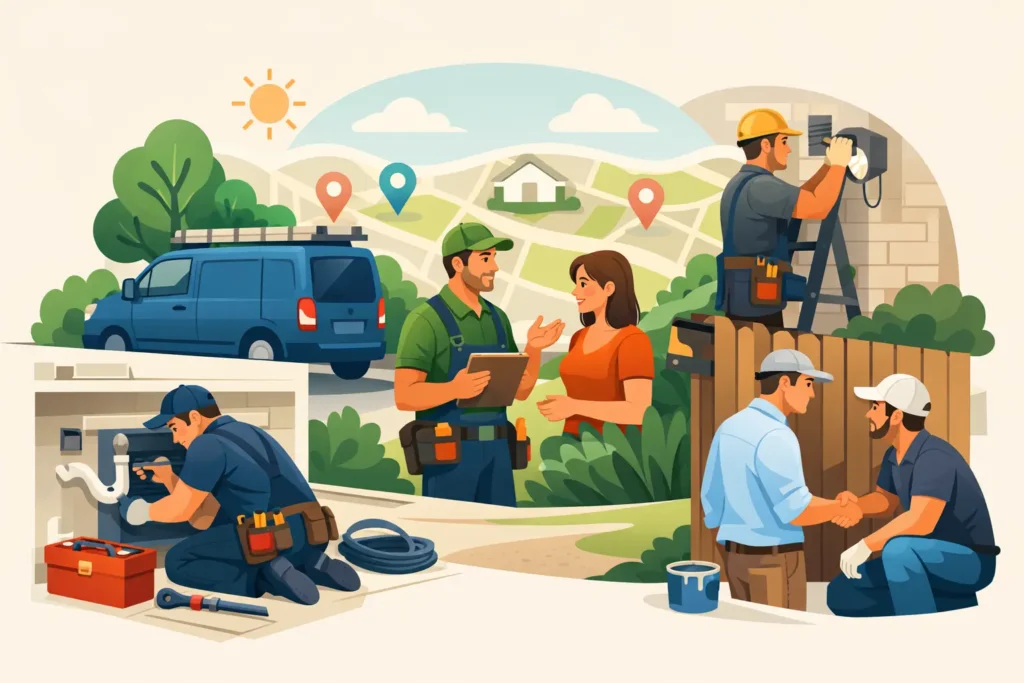
A lot of tradies don’t have a lead problem. They have a visibility and conversion problem.
You can be doing solid work, have a decent reputation, and still not get more local enquiries if your business is hard to find online or gives people no clear reason to contact you. Most local customers are not spending hours researching. They search, compare a few options, and call the one that looks trustworthy and easy to deal with.
If you want more enquiries from the areas you actually service, your website, Google Business Profile, reviews, and contact process all need to work together. One weak point can cost you jobs every week.
Why local businesses miss out on good enquiries
Most service businesses assume that if they have a website and a Google listing, that should be enough. Sometimes it is. Often, it isn’t.
A common problem is being visible for your business name, but not for the work people actually search for. If someone needs a plumber in Midland or an electrician in Mundaring, they are not typing your business name unless they already know you. They are searching by service and suburb.
The second problem is poor conversion. Even when people land on your website or Google profile, they may not call. That usually comes down to unclear service info, weak trust signals, slow mobile performance, or too many steps between interest and action.
Then there is follow-up. Plenty of local businesses spend money getting traffic, then lose the lead because nobody answers the phone, the quote request form goes nowhere, or the reply comes the next day after the customer has already booked someone else.
Get more local enquiries by fixing what customers see first
Before you think about more traffic, look at what happens when someone finds you.
Your homepage should make it obvious what you do, where you work, and what the next step is. If a customer lands on your site, they should know within a few seconds whether you are the right fit. A vague headline, stock photos, and buried contact details will not help.
Tradies usually do better with simple, direct pages. Say what service you provide. Mention the areas you cover where it makes sense. Show your phone number clearly. Add an enquiry form that is quick to fill in. Make it easy for someone on a mobile to call straight away.
Trust matters just as much as layout. Real job photos, clear service pages, recent reviews, and straightforward wording do more than fancy design ever will. People want to know that you are local, reliable, and likely to show up when you say you will.
Your website should answer the basic questions fast
A high-performing local website does not need to be complicated, but it does need to remove doubt.
Customers want quick answers. Do you offer the service they need? Do you service their suburb? Can they call now? Are you experienced? Have other people had a good experience with you?
If those answers are buried, people bounce. If they are obvious, you get more calls and more form enquiries.
That also means your contact page cannot be an afterthought. A lot of small businesses make people hunt for a phone number or fill in a long form asking for unnecessary details. Keep it short. Name, phone, suburb, and a quick description of the job is usually enough to start the conversation.
Google Business Profile does a lot of the heavy lifting
For many local service businesses, your Google Business Profile gets seen before your website does. That makes it one of the biggest drivers of local enquiries.
An incomplete or neglected profile sends the wrong message. A well-managed one gives customers confidence and helps you show up in local search and map results.
Make sure your business category is right, your service areas are accurate, your phone number is current, and your hours make sense. Add proper service descriptions in plain English. Upload genuine photos of your work, vehicles, team, and completed jobs where appropriate. Keep it active rather than setting it up once and forgetting it.
Reviews are a major part of this. Not just the star rating, but the words people use. When customers mention the type of work you did and where you did it, that helps build trust and relevance. A steady flow of fresh reviews often does more for local lead flow than business owners realise.
Reviews help you get more local enquiries
Most tradies know reviews matter, but many still leave them to chance.
If you finish a job and the customer is happy, ask for the review while the job is still fresh. Make it easy. Keep the request simple and polite. You do not need hundreds overnight. Consistent, genuine reviews over time are more useful than a one-off push followed by silence.
Also, respond to reviews. It shows that you are active, professional, and paying attention. That matters when a customer is comparing three businesses that all seem similar at first glance.
Service pages matter more than most businesses think
One page that says you do everything is rarely enough if you want steady local enquiries.
If you are a plumber, create separate pages for blocked drains, hot water systems, leak detection, emergency plumbing, and any other core service you want more of. If you are an electrician, do the same for switchboard upgrades, lighting, fault finding, smoke alarms, and so on.
This is not about stuffing suburbs and keywords everywhere. It is about giving Google and your customers a clear page that matches what they are searching for. A person looking for retic repair is more likely to enquire if they land on a page focused on that service, not a generic homepage that barely mentions it.
Where location pages make sense, they should be useful and specific. If you work across Perth Hills suburbs, write pages that reflect those areas properly rather than churning out copy that says the same thing with a suburb name swapped in.
Speed, mobile use, and simplicity win jobs
Most local customers find tradies on their mobile. They might be in the driveway, at work, or standing in a laundry with a leak getting worse by the minute. They are not patient.
If your website is slow, hard to use, or cluttered, they leave. If the phone number is easy to tap, the pages load quickly, and the service is clearly explained, you are far more likely to get the call.
This is where practical website design matters. Not flashy effects. Not clever wording. Just a site that works properly on mobile, loads fast, and gets people to take action.
Don’t waste the enquiry once it comes in
A surprising number of businesses focus so hard on getting enquiries that they forget to handle them well.
If you miss calls all day and never call back, your marketing is leaking. If your form submissions go to an inbox nobody checks, same issue. If your replies are vague or delayed, people move on.
Local leads are often won by the business that responds first and sounds most helpful. That does not mean you need to be chained to your mobile every minute. It means having a workable system. A clear voicemail. Fast call-backs. Enquiry forms that go to the right person. Short, direct replies that make the next step easy.
If you are flat out on the tools, even small improvements here can make a big difference.
What actually moves the needle
If you are trying to get more local enquiries, do not spread yourself across ten different tactics at once. Start with the parts that directly affect whether people can find you and whether they trust you enough to contact you.
For most tradies and service businesses, that means a website built to convert, a properly set up Google Business Profile, strong service pages, real reviews, and fast follow-up. That combination is what turns online visibility into booked work.
It also depends on where you are starting. If your business already shows up on Google but no one calls, the problem is probably conversion. If your site is decent but you barely appear in local search, visibility is likely the issue. If leads are coming in but not turning into jobs, the gap may be in your response process.
That is why quick fixes do not always work. The right move depends on what is actually broken.
For Perth tradies and local service businesses, the goal is not more website traffic for the sake of it. It is more of the right people landing on the right page and taking the next step. Fix that properly, and enquiries stop feeling random. They start becoming consistent.