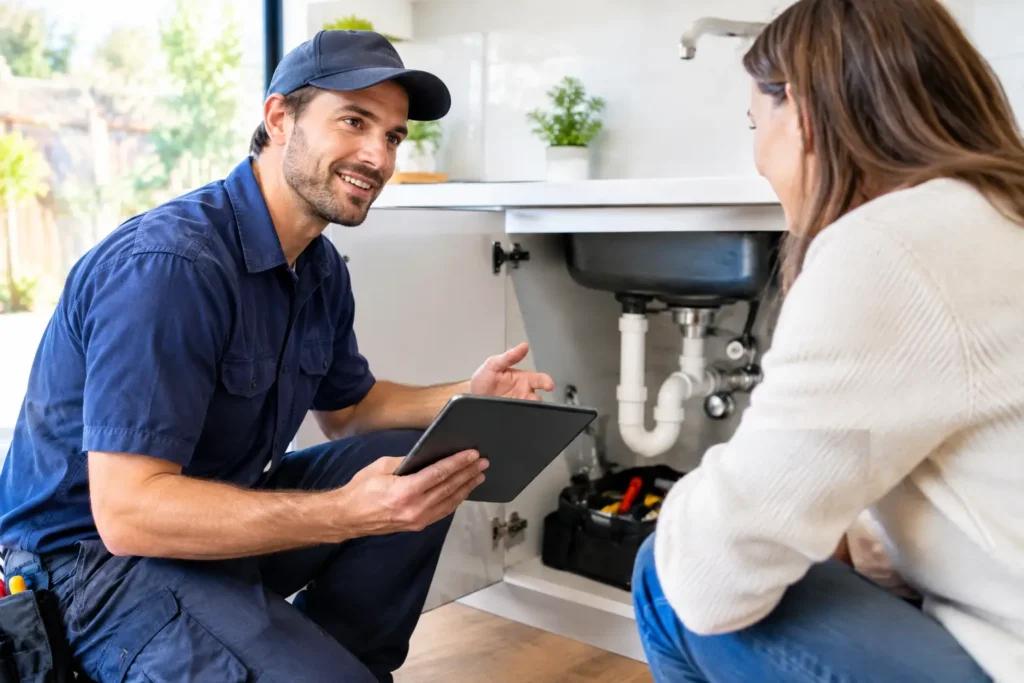
A customer has a blocked drain, a leaking hot water system or water pooling under the sink. They are not looking to fill out paperwork. They want to know whether you can help, how soon you can get there and how to contact you. That is why plumber booking form optimisation matters. A simple form can turn a website visit into a booked job. A clunky one sends that customer straight back to Google.
For Perth plumbing businesses, the goal is not to make customers complete a detailed job sheet online. The goal is to make it easy for the right people to get in touch, then give your team enough information to respond quickly and properly.
Start with the job your form needs to do
A booking form has one job: get a genuine enquiry without making the customer work for it. If it asks too much too early, people give up. If it asks almost nothing, you spend half the day chasing details before you can confirm the job.
The right balance depends on the type of work you want more of. An emergency plumber needs a short, mobile-friendly form with a prominent phone number for urgent calls. A business that focuses on bathroom renovations, hot water replacements or planned drainage work can ask a little more, because customers are usually willing to explain the project.
Do not use one generic form for every service if it creates confusion. A person dealing with an overflowing toilet has different needs from someone requesting a quote for a new gas bayonet. Service-specific forms often perform better because the wording matches the problem the customer is trying to solve.
Keep plumber booking form optimisation simple
Most plumbing enquiry forms can get the essentials with five fields:
- Name
- Mobile number
- Suburb
- What help they need
- Preferred contact time
An optional photo upload can also be useful for visible leaks, damaged fixtures and drainage issues. It may help you assess the job before arriving, but it should never be compulsory. A customer on a mobile with a water leak does not want to hunt through their camera roll just to ask for help.
Email can be useful for sending quotes and confirmations, but a mobile number is often more valuable for a local plumbing business. Many customers expect a call or text back, especially when the problem is urgent. If you require both a phone number and email address, make sure there is a clear reason. Every extra required field creates another chance for someone to leave.
Avoid asking for a full street address at the first step unless it is essential to your booking process. A suburb is usually enough to confirm whether the job is in your service area. You can collect the complete address once the customer has spoken with you or accepted a booking time.
Use plain-English field labels
Your form labels should sound like something a customer would say, not something taken from a trade invoice. “Tell us what’s happening” is clearer than “Job description”. “Best number to call you on” is clearer than “Contact telephone”.
The same applies to dropdown menus. If you offer categories, keep them broad and useful: blocked drains, leaks and burst pipes, hot water systems, gas plumbing, toilets and taps, and quotes or other work. Always include an “other” option. Customers do not always know the correct name for the problem, and they should not have to.
Put the form where customers need it
A good form hidden on a contact page will not produce the results it should. Customers land on service pages from Google, read enough to decide you may be able to help, then need an obvious next step.
Place a short enquiry option on key pages such as blocked drains, hot water, gas plumbing and emergency work. It does not need to take over the whole page. A clear button that takes the customer to the form can work well, particularly on mobile where long pages are harder to navigate.
For urgent services, put your phone number above the form and make the call option clear. A form is not a replacement for answering the phone. It is there for customers who cannot call, are at work, or prefer to send details first. If someone has an active burst pipe, they need confidence that they can reach a real person fast.
A strong page gives people both choices: call now for urgent help, or send an enquiry for a callback. That removes friction without forcing every customer down the same path.
Make mobile use the priority
Most local plumbing searches happen on a mobile. If your form is fiddly on a small screen, the rest of the website does not matter much.
Check it yourself on a mobile, not just on a desktop computer. Can you tap each field easily? Does the keyboard cover the button? Does the form ask for information in a sensible order? Does the phone number field bring up a number keypad? These small details directly affect whether people finish the form.
Keep the submit button obvious. “Request a callback” or “Send my enquiry” tells customers what happens next. “Submit” is not wrong, but it is vague and does nothing to reduce uncertainty.
Also make sure the button does not promise something you cannot deliver. “Book now” can create problems if your form is only a booking request and no appointment is confirmed until you check availability. In that case, “Request a booking” is more honest.
Tell people what happens after they press send
People are more likely to enquire when they know they will not disappear into a black hole. A short line near the button can do a lot of work: “We’ll call you back during business hours to confirm the job” or “For urgent plumbing help, call us now.”
The message after submission matters as well. Do not leave customers staring at the same form wondering whether it worked. Show a simple confirmation that thanks them, confirms their enquiry has been received and explains the next step.
This is also where your internal process counts. If your website says you will call back quickly, someone needs to see the enquiry and act on it. Forms that sit unread for hours cost jobs, no matter how well designed they are. Set notifications to the right mobile or inbox, test them regularly, and have a backup person during busy periods.
Build trust before asking for details
A customer is handing over their name, number and problem to someone they may not know. The form works harder when the page around it gives them reasons to trust you.
Keep the trust signals relevant. Mention that you service their local area where appropriate. Show genuine customer reviews nearby. Make your licence details and business contact information easy to find. Use photos of your own work, vehicles or team where possible, rather than generic images that could belong to any plumber in any city.
You do not need a wall of claims beside the form. Two or three practical assurances are enough: licensed plumbing work, clear communication and a prompt callback. What you can genuinely stand behind is more convincing than a long list of sales phrases.
Test the form with real enquiries in mind
Plumber booking form optimisation is not a set-and-forget job. Review your form when enquiries are low, but also when they are coming through and not turning into booked work. The problem may be the questions, the location of the form, the follow-up speed or the kind of leads the page attracts.
Start by looking for obvious drop-off points. If customers regularly leave the form halfway through, remove a field or make it optional. If most enquiries are vague, adjust the problem prompt to encourage a little more detail. If people request jobs outside your area, add a suburb field earlier or make your service area clearer on the page.
It is worth asking your office staff or whoever answers enquiries what details they are always chasing. Their answer should shape the form more than a generic website checklist. They know what is needed to give a useful response and get the job in the diary.
A form should help your business answer the phone, sort genuine work from tyre-kickers and get customers looked after quickly. If yours is slow, confusing or asks for too much, it is costing you enquiries you have already paid to attract. Fixing it is often one of the quickest ways to get more value from the website you already have. If you are not sure where the gaps are, Yazoogle can review the customer journey and help turn more local searches into real plumbing jobs.