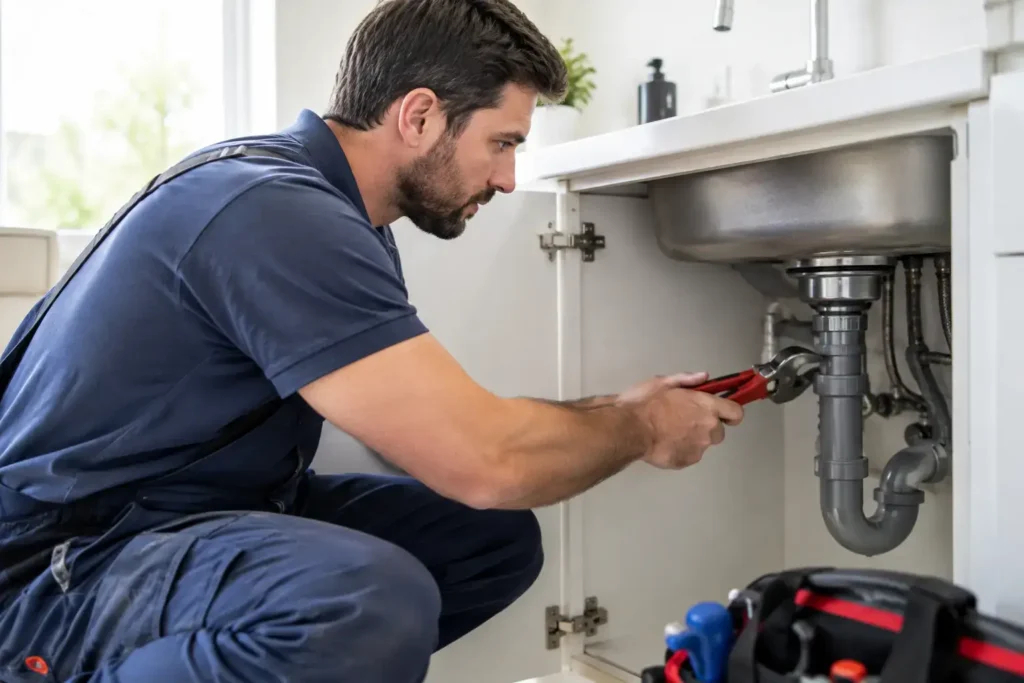
A plumber can be flat out one month and staring at gaps in the diary the next, even when plenty of local people are searching for help. This plumber website enquiry growth example shows what can change when a website stops acting like an online brochure and starts making it easy for customers to call, enquire and book.
The situation will sound familiar. A local plumbing business had a basic website, a Google Business Profile and decent word-of-mouth referrals. The site looked acceptable at a glance, but it was not producing enough direct enquiries. People were finding it, then leaving without calling.
The issue was not that the business needed more complicated marketing. It needed a clearer path from a local Google search to a phone call.
The starting point: a website that was not doing its job
The old site had the usual problems. It was slow and awkward on mobile, where most urgent plumbing searches happen. The home page opened with vague wording about quality service rather than telling customers exactly what the plumber could help with. Important details such as service areas, emergency availability and phone numbers were hard to spot.
There was also one generic services page trying to cover everything: blocked drains, hot water systems, leaking taps, gas fitting, toilet repairs and emergency call-outs. That might feel efficient when putting a website together, but it gives Google very little to work with and gives customers no confidence that their specific problem is understood.
A customer searching “blocked drain plumber Midland” has a simple question: can this person get here, fix this problem and answer the phone? If the page makes them hunt for that answer, they will hit the back button and call the next result.
The website was receiving some traffic, but traffic alone does not fill the ute. The goal was to turn the right visitors into enquiries.
What changed in this plumber website enquiry growth example
The first job was not adding flashy features. It was stripping away anything that got between a worried customer and a call.
The home page was rebuilt around the jobs the business wanted more of. Instead of a broad introduction, it led with clear, practical wording: local plumbing help, the key service areas, the main types of work handled and a prominent phone number. The call to action was direct: call now for urgent work or request a booking for non-urgent jobs.
On mobile, the phone button stayed visible as users moved through the page. That matters because a person standing in a laundry with water on the floor does not want to fill in a long form. They want a plumber who answers the phone.
A short enquiry form was still included for customers who preferred to write. It asked only for the information needed to respond properly: name, suburb, phone number and a brief description of the issue. Long forms can filter out poor enquiries, but they can also put off good customers. For most local plumbing businesses, simple wins.
Service pages were built around real searches
Rather than one catch-all page, the site was organised around individual services. Separate pages covered the work people actually search for, such as emergency plumbing, blocked drains, hot water repairs, leaking taps and toilets, and gas plumbing.
Each page explained the problem in plain English, what the plumber could do, where the service was available and how to get in touch. This was useful for two reasons. Local customers could quickly see they were in the right place, and Google had clearer pages to show for relevant searches.
This does not mean creating dozens of near-identical pages with suburb names swapped in. That sort of shortcut creates thin content and does not help customers. A better approach is to build useful core service pages, then make the service area information accurate and relevant.
Local proof replaced empty claims
The old website said the business was reliable and professional. Every plumbing website says that. The updated site gave customers reasons to believe it.
It included genuine reviews, a short introduction to the plumber, photos of real work and clear service-area details. If the business had licences, relevant qualifications or emergency availability, those were displayed where customers could see them without digging around.
For a local service business, trust is often decided in seconds. Customers are letting someone into their home or business, often when something has gone wrong. Real proof is more convincing than a page full of broad promises.
The Google Business Profile had to match the website
A website cannot do all the heavy lifting on its own. For plumbing searches with local intent, the Google Business Profile is often the first thing a customer sees.
In this example, the profile details were checked and cleaned up. The phone number, trading hours, service categories and service areas matched the website. Fresh photos were added, and the business had a simple process for asking happy customers for a review after the job was complete.
Consistency matters. If Google sees one suburb on the profile, another on the website and a disconnected phone number elsewhere, it creates doubt. More importantly, customers notice when details do not line up.
Reviews also helped the business stand out when people compared local options. The aim was not to chase a huge number overnight. It was to keep earning genuine, recent feedback that mentioned the sort of work customers needed help with.
What enquiry growth looked like in practice
The improvement did not come from one big ranking jump or a viral social media post. It came from fixing several points where enquiries were being lost.
Customers arriving from Google could immediately see the services available, whether the plumber worked in their area and how to make contact. Those on mobile could call with one tap. Those researching a hot water replacement or planning non-urgent work could send a quick request without feeling pressured.
Over the following months, the business saw more calls and form enquiries from the website. The better result was not simply a higher visitor number. It was a higher share of visitors taking action.
That distinction matters. A website attracting 500 people who are outside your service area or looking for DIY advice is less valuable than one attracting 100 local customers who need a plumber now. For tradies, the measures worth watching are calls, submitted forms, booked jobs and the quality of the leads coming through.
Why some plumbing websites still fail to convert
A nice-looking website can still be a poor lead generator. The most common issue is making the customer work too hard. They cannot quickly find a phone number, they are unsure what services are offered, or they do not know whether the plumber services their suburb.
Another issue is trying to appeal to everyone. If your best work is drain clearing, hot water systems and emergency repairs, say so. You do not need to pretend every job is your main job. Clear positioning helps the right enquiries come through and can reduce time-wasting calls.
There is a trade-off with emergency work too. Promoting 24/7 call-outs can bring in urgent leads, but only if you genuinely have the capacity to answer and attend. If you do not offer round-the-clock service, be upfront about your hours and response times. Clear expectations protect your reputation.
The practical lessons for a Perth plumber
If your site gets visits but the phone is quiet, start with the basics. Check it on your own mobile. Can a customer call in one tap? Can they find your main services in seconds? Do they know which areas you cover? Is there proof that real customers trust you?
Then look at where your enquiries come from. If a particular service is profitable and regularly searched in your area, it deserves a proper page rather than a passing mention. If your Google Business Profile is incomplete or reviews have gone stale, fix that alongside the website work.
A good tradie website is not there to win design awards. It is there to make the next customer feel confident enough to pick up the phone. When that is built into every page, more of the searches you are already appearing for can turn into real jobs.