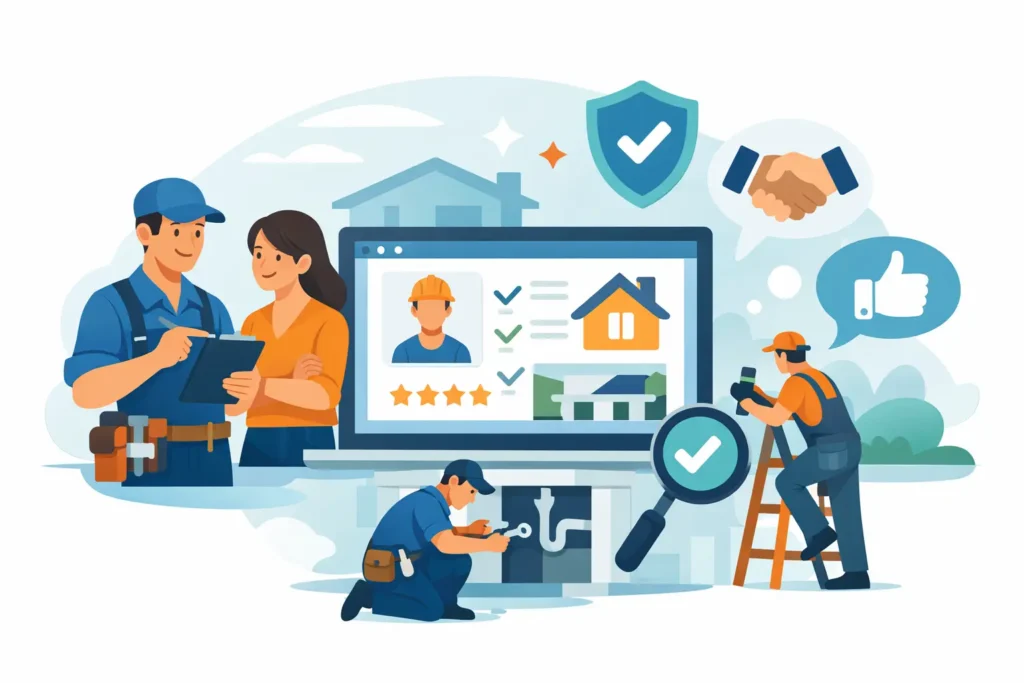
A lot of tradie websites lose work before the phone even has a chance to ring. Not because the business is no good, but because the site gives people too many reasons to hesitate. A solid website trust signals checklist helps fix that. It shows visitors you’re real, reliable, local, and worth contacting right now.
If someone needs a plumber, sparkie, builder or landscaper, they are usually not in the mood to investigate for half an hour. They want to know three things fast – can you do the job, can they trust you, and can they get hold of you easily. If your website answers those questions clearly, you’ll get more enquiries. If it doesn’t, people move on.
Why trust signals matter on a tradie website
Trust signals are the pieces of your website that make a customer feel safe enough to call, message, or book. Some are obvious, like reviews and photos. Others are simpler than people realise, like having a mobile number in the header, clear suburb service areas, and a website that doesn’t look neglected.
For local service businesses, trust matters more than clever design. A flashy site with no proof behind it won’t convert well. On the other hand, a straightforward website with genuine reviews, job photos, licence details where relevant, and clear contact info can do a lot of heavy lifting.
This is also where plenty of businesses get stuck. They assume trust comes from saying they offer quality service. It doesn’t. Trust comes from showing evidence.
Website trust signals checklist: what actually matters
The best website trust signals checklist is not about cramming every possible badge and icon onto your pages. Too much can look forced. What matters is putting the right proof in the right places.
Clear contact details above the fold
If someone lands on your site and has to hunt for a phone number, that’s a problem. Your mobile number should be easy to spot straight away, especially on mobile. If people are ready to call, don’t make them scroll.
It also helps to show a real business email address and a proper contact page. A basic form is fine, but only if it’s short and easy to use. Asking for too much information too early can put people off.
Real reviews from real customers
Reviews are one of the strongest trust signals you can have. They work because they are not you talking yourself up. They are other people saying you turned up, did the job properly, cleaned up, and charged fairly.
The key is to use genuine reviews that sound natural. A page full of vague one-line praise doesn’t carry much weight. Specific reviews are better. If a customer mentions the suburb, the type of work, or how quickly you responded, that feels far more believable.
If you’ve got strong Google reviews, feature them on the website. Just keep them current. Reviews from five years ago won’t help as much as recent ones.
Photos of your actual work
Stock images are better than empty space, but they don’t build much trust. Real photos of your team, your vans, your tools, and completed jobs do. They prove you’re an active business, not just a website.
This matters a lot for tradies. A gallery of before-and-after shots, install photos, outdoor projects, fit-outs, or repair work can quickly show the standard of your work. The photos don’t need to be perfect. They just need to be real, clear, and relevant.
If you can include photos from jobs around your service area, even better. It helps people feel like you’re local and already working nearby.
Service area details
A lot of websites say they service Perth, but that can still feel vague. If you work across Perth Hills, Midland, Mundaring or nearby suburbs, say so clearly. This helps with trust because visitors can immediately see whether you cover their area.
It also saves wasted enquiries from people outside your range. Being clear about where you work is better than being broad for the sake of it.
A proper About page
People do check the About page, especially for higher-value jobs. They want to know who they’re dealing with. That doesn’t mean you need a long life story. It means your site should explain who you are, what sort of work you do, and why locals trust you.
A photo of the owner or team helps. So does plain-English copy that sounds like a real business owner, not generic agency fluff. If your business is family-run, established, or known for quick response times, say it. Just keep it honest.
Licences, accreditations and insurance where relevant
For some trades, these matter a lot. For others, they are a nice extra. If you hold licences, qualifications, white cards, safety certifications, or relevant memberships, show them where appropriate. Public liability insurance can also reassure customers, especially for bigger jobs.
The trade-off is not to overdo it. A wall of logos can look cluttered. Use the credentials that actually matter to your type of customer.
Trust signals that help people take action
Some trust signals are less about proving you’re legitimate and more about making people feel comfortable enough to contact you.
Fast-loading pages and a mobile-friendly layout
If your website is slow, broken on mobile, or hard to read, people start to question the business behind it. Fair or not, that’s how it works. A clean site that loads quickly and works properly on mobile creates confidence.
Most of your visitors are likely checking you on their mobile while comparing a few businesses at once. If another tradie’s site is easier to use, they may get the call instead.
Clear service pages
If you do blocked drains, hot water systems, switchboard upgrades, retaining walls, painting, or maintenance work, spell that out clearly. Customers should not need to guess whether you do their type of job.
Good service pages build trust because they show you understand the work. They also reduce poor-fit leads. Someone with an urgent repair wants to know straight away that you handle urgent repairs.
Straightforward wording
Trust drops when websites sound vague, padded, or overhyped. Plain English works better. People want to know what you do, where you work, and how to contact you.
That’s especially true for tradie websites. If every second line sounds like marketing talk, it creates distance. A direct tone feels more honest.
Visible calls to action
A trust signal is not always a badge or review. Sometimes it’s a simple message like Call now, Request a quote, or Book a site visit. Clear next steps reduce uncertainty.
If your site buries the contact option, people hesitate. If it makes taking action easy, they are more likely to follow through.
Common trust killers to fix first
If you already have a website, start by looking for the things that quietly damage trust.
An outdated design can do it. So can missing contact details, no suburb mentions, low-quality photos, spelling mistakes, or forms that don’t work properly. Even something as simple as an old copyright date can make the site feel neglected.
Another common problem is inconsistency. If your website says one thing, your Google Business Profile says another, and your reviews mention services you don’t explain well on the site, it creates doubt. Customers might not know exactly what you offer or whether you’re still active.
There’s also the issue of overclaiming. Saying you’re the best, leading, number one, or most trusted means very little without proof. Specific evidence always beats big claims.
How to use this website trust signals checklist properly
Don’t treat this like a one-off tidy-up. Trust signals should be part of how your website is maintained over time. Add new reviews. Upload fresh job photos. Update service areas if they change. Make sure your forms, mobile buttons, and page content still work the way they should.
If time is tight, start with the high-impact items first. Make your phone number obvious. Add recent reviews. Replace stock images with real job photos. Tighten up your service pages. Those changes often make a noticeable difference.
For some businesses, that’s enough to lift enquiry rates. For others, it depends on how competitive the area is and how poor the current site is. If your website already gets traffic but not enough calls, trust issues may be one of the main reasons.
A good tradie website does not need to be fancy. It needs to feel real, current, easy to use, and backed by proof. If a customer can land on your site and quickly think, these people look legit, they do this sort of work, and they answer the phone, you’re on the right track.
If your website isn’t doing that yet, that’s the first thing to fix. More traffic helps, but trust is what turns that traffic into actual jobs.